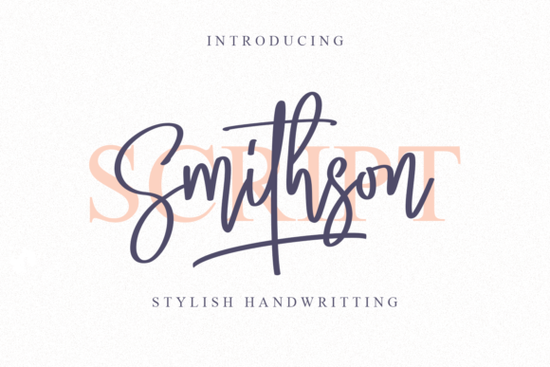
If you're looking for a handwritten font that feels both elegant and approachable something that works just as well on a wedding invitation as it does on a handmade soap label Smithson Font is worth your attention. It’s not overly ornate, but it carries clear calligraphic roots: subtle entry and exit strokes, gentle contrast in line weight, and natural-looking letterforms that avoid the stiffness of digitized scripts. Designed with real-world use in mind, it’s PUA encoded, so all alternate characters and swashes are easy to access in design apps like Adobe Illustrator, Affinity Designer, or even Cricut Design Space no workarounds needed.
Who actually uses Smithson and why?
Small business owners often choose Smithson Font when they want their branding to feel personal without leaning too casual. Think boutique bakeries, indie bookshops, or local florists who print their own tags and packaging. Crafters appreciate how smoothly it cuts on vinyl or cuts cleanly in paper projects especially since its letters have consistent spacing and no overly tight connections that cause cutting errors. Print-on-demand sellers also find it reliable across product types: it scales well on mugs, looks balanced on tote bags, and holds up nicely on smaller items like greeting cards or stickers.
How does it compare to other popular script fonts?
Unlike some highly stylized scripts that rely on dramatic flourishes, Smithson keeps things grounded. It doesn’t try to mimic copperplate or modern brush lettering it occupies its own quiet space between classic and current. If you’ve tried Quincy Font and liked its warmth but wanted something slightly more refined, Smithson fits that gap. Or if Ashley Southine Font felt a little too bouncy for your project, Smithson offers similar friendliness with more structure. It’s less decorative than Front Picture Font, and less condensed than Stylish Font, making it easier to pair with clean sans-serif typefaces for balanced layouts.
What makes the encoding practical not just technical?
PUA (Private Use Area) encoding means every alternate glyph including ligatures, beginning/end swashes, and stylistic variants is mapped to a key you can reach directly from your keyboard. No need to dig through Glyph Panels or install extra plugins. In programs that support OpenType features (like Illustrator or Photoshop), you’ll see automatic contextual alternates kick in as you type so “the” might get a custom connecting ‘t-h’ combo, or word endings automatically swap in a graceful exit stroke. For crafters using Silhouette Studio or Cricut, installing the font gives you full access to those swashes via the Character Map or by typing specific keys just check the included PDF guide for the layout.
Real projects where Smithson shines
- Wedding stationery: Works beautifully at small sizes (10–12 pt) for place cards and menus still legible, still graceful.
- Product labels: Its moderate x-height and open counters help it stay readable on curved surfaces like candle jars or shampoo bottles.
- Digital downloads: Bundled with matching lowercase alternates and catchwords, it’s a go-to for Canva templates aimed at lifestyle bloggers or planners.
- Social media graphics: Stands out in Instagram story text overlays without competing with photos thanks to its even rhythm and soft contrast.
It’s worth noting that while Smithson has personality, it avoids quirks that hurt readability like extreme letter slant or inconsistent baseline alignment. That’s why designers often reach for it when they need something hand-drawn in spirit but predictable in execution. If you’re curious about how it compares visually to other contemporary scripts, you can preview Smithson font alongside options like Quincy font or Ashley Southine font directly on Creative Fabrica.
A quick checklist before you download
- ✅ You’re using software that supports OpenType fonts (most modern design tools do).
- ✅ You’ve checked the included documentation for swash key mappings especially if you’re working in a program without Glyph Panel access.
- ✅ You’ve tested how it renders at your intended size and output method (e.g., printed vs. screen, vinyl cut vs. embroidery).
- ✅ You’ve paired it with a neutral companion font like Montserrat, Lato, or even a light serif for body text or captions.
If you already have Smithson Font in your library, try swapping it into one existing project this week maybe a simple quote graphic or product tag and see how the tone shifts. Sometimes the smallest type choice makes the biggest difference in how people connect with your work.
Download Now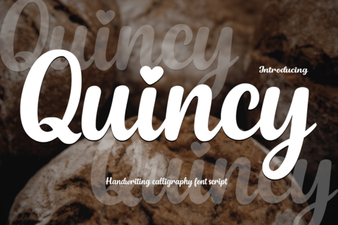 The Quincy Font for Readable & Creative Designs
 Thick Fonts for Strong Visual Impact
 Creative Font Designs for Modern Projects
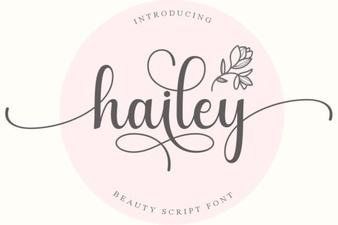 Hailey Font for Creative Designs & Branding Projects
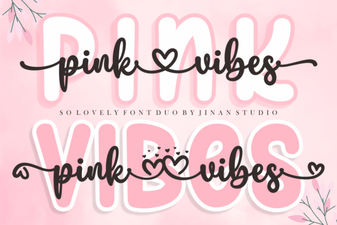 Pink Vibes Duo Font: Design with Creative Typography
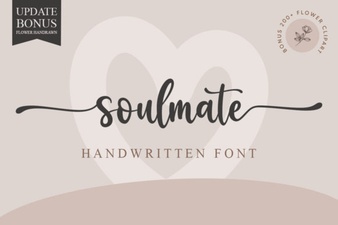 Craft Love Letters with a Soulmate Font